
You can have a great website, a strong product, and a well-designed advertising campaign. But if you are targeting the wrong keywords, you may still struggle to reach the right customers.
People search on Google with different intentions. Someone might search for “how to choose running shoes” because they are researching. Another person might search for “buy running shoes under ₹5,000” because they are ready to purchase. Both searches are related to running shoes, but they represent very different opportunities for a business.
This is why keyword research is an important part of digital marketing.
Keyword research helps businesses understand what their potential customers are searching for, how they search for products or services, and what kind of information they expect to find. It can help shape website content, SEO strategies, landing pages, Google Ads campaigns, and even the way a business communicates with its audience.
However, there is an important distinction that is often overlooked.
Keyword research for SEO and keyword research for PPC are not exactly the same.
The basic idea is similar. In both cases, you are trying to understand what people search for. But the way you evaluate and use those keywords can be very different.
With SEO, the goal is to identify searches that your website can potentially rank for organically and create useful content or pages around those searches.
With PPC, particularly Google Ads, you are deciding which searches are worth spending money on. Search intent, relevance, competition, cost, conversion potential, match types, and the available advertising budget become much more important.
For example, a business selling sports shoes might discover thousands of searches related to shoes. But targeting every possible keyword would not necessarily produce good results.
A search such as “types of running shoes” could be useful for an informational blog article.
“Best running shoes for beginners” could be useful for a comparison or buying guide.
“Buy men’s running shoes online” shows stronger commercial intent and could be more relevant to an ecommerce campaign.
The keyword itself is only one part of the decision. Understanding why someone is searching is what makes keyword research useful.
That is where effective keyword research begins.
What Is Keyword Research?
Keyword research is the process of finding and analysing the words and phrases people use when searching for information, products, services, or solutions on search engines such as Google.
These words and phrases are commonly referred to as keywords.
A keyword does not necessarily have to be a single word.
For example:
- Shoes
- Sports shoes
- Running shoes
- Men’s running shoes
- Men’s running shoes under ₹5,000
- Best running shoes for beginners
- Buy running shoes online
All of these can be considered keywords or search phrases.
The more specific a search becomes, the more information it can reveal about what the person wants.
Someone searching for “shoes” could be looking for almost anything related to footwear.
Someone searching for “men’s running shoes under ₹5,000” has already provided much more information. They have indicated the product, the audience, the purpose, and even their approximate price range.
This is why businesses should not look at keyword research as simply creating a large list of popular search terms.
The real objective is to identify relevant searches that connect customer intent with business value.
And this is where SEO and PPC keyword research start to take different directions.
Why Is Keyword Research Important?
Keyword research is not simply about finding words that have a high number of searches. It is about understanding what potential customers are looking for and identifying the searches that are relevant to a business.
When done properly, keyword research can influence several parts of a digital marketing strategy.
1. It Helps You Understand Your Customers
Customers do not always describe a product or service in the same way a business does.
A company may describe itself as a provider of “professional website development solutions,” while a potential customer may simply search for “website development company” or “website developer near me.”
Keyword research helps businesses understand the language their customers actually use.
This can be useful not only for SEO and Google Ads, but also for website copy, social media content, landing pages, blogs, and marketing campaigns.
2. It Helps Identify Search Intent
Search intent refers to the reason behind a person’s search.
Consider these searches:
“What is SEO?”
The person is probably looking for information.
“Best SEO agency for small business”
The person may be comparing different options.
“SEO agency Pune”
The person is likely looking for a service provider.
“Hire SEO agency”
The person may be closer to making a purchase decision.
These searches may all contain the word “SEO,” but they do not represent the same customer journey.
Understanding search intent allows a business to create the right page, content, or advertisement for the person behind the search.
3. It Helps Find Business Opportunities
Keyword research can uncover searches that a business may not have considered before.
For example, a website development company may initially focus on:
“website development”
But research could reveal more specific opportunities such as:
- ecommerce website development
- business website development
- WordPress website development
- website redesign services
- website development company Pune
- affordable website development
- custom website development
Some of these keywords may have lower search volume than the broader term, but they could be much more relevant to specific services.
This is an important principle in keyword research:
More searches do not always mean more business.
A keyword with thousands of monthly searches may bring a large amount of traffic but very few customers.
A more specific keyword with fewer searches may attract people who are much closer to making a decision.
4. It Helps Build Better SEO Content
Keyword research can help determine what pages and content a website should create.
Suppose people are searching for:
“how much does a website cost?”
A website development company could create an informative article answering that question.
If people are searching for:
“ecommerce website development company”
the business may need a dedicated service page rather than another general blog article.
This creates a connection between what people are searching for and what a website provides.
The goal is not to insert keywords into a page as many times as possible. The goal is to create a useful page that satisfies the reason behind the search.
5. It Helps Make Better PPC Decisions
Keyword research becomes even more directly connected to money when you are running Google Ads.
In SEO, selecting a keyword usually means deciding whether a page or piece of content should target that search.
In PPC, selecting a keyword can mean deciding whether you are willing to pay for that search.
That changes the decision-making process.
For example, imagine a business selling sports shoes.
The keyword:
“sports shoes”
could generate a large number of searches.
But the keyword:
“buy men’s running shoes under ₹5,000”
may tell you much more about what the person wants.
If the business pays for clicks, it needs to consider whether those clicks are likely to contribute to a business outcome such as a sale, enquiry, registration, or lead.
This is why PPC keyword research requires more than simply finding keywords with high search volume.
Search Volume Is Not Everything
Search volume is useful, but it should not be the only factor used to select a keyword.
A keyword should also be evaluated based on:
- Relevance to the business
- Search intent
- Competition
- Cost per click
- Potential conversion value
- Location
- Product or service being offered
- The quality of the landing page
- The stage of the customer’s buying journey
A business should ask a simple question:
“If someone searches this keyword, how likely are they to become the type of customer we want?”
That question can completely change the way keyword research is approached.
And this leads to one of the biggest differences in digital marketing:
The way you research keywords for SEO is different from the way you research keywords for paid advertising.
SEO Keyword Research vs PPC Keyword Research
SEO and PPC both use keywords, but the purpose behind those keywords is different.
This is one of the most important things to understand before starting keyword research.
If you use the same approach for both, you may end up targeting keywords that bring traffic but do not support your actual marketing objective.
SEO Keyword Research
SEO keyword research focuses on finding search terms that can help a website gain visibility in organic search results.
The objective is not simply to find keywords with a high search volume. You need to understand what people are searching for, what kind of content Google is showing for those searches, and whether your website can provide a better or more useful answer.
For example, imagine a website development company.
Some possible SEO keywords could be:
- what is website development
- how much does a website cost
- ecommerce website development
- website development company
- website redesign services
- how to choose a website development company
These searches can represent different stages of the customer’s journey.
An informational keyword may be suitable for a blog article.
A service-related keyword may require a dedicated service page.
A location-based keyword may require a local landing page.
The keyword therefore influences not only what you write, but also what type of page you create.
SEO keyword research can also help with website structure, content planning, internal linking, landing pages, and identifying gaps where competitors may already be receiving organic traffic.
PPC Keyword Research
PPC keyword research has a different concern.
When you run Google Ads, you are paying to appear for relevant searches.
That means every click has a cost.
The question is no longer simply:
“Can we rank for this keyword?”
It becomes:
“Is this search worth paying for?”
Suppose a business offers website development services.
A search such as:
“what is a website?”
may receive significant search interest, but the person searching may not be looking for a website development company.
On the other hand:
“website development company”
has a much clearer commercial connection to the service.
A search such as:
“website development company Pune”
can provide even more specific information if the business serves that location.
For PPC, factors such as search intent, estimated cost, competition, conversion potential, location, budget, and landing page relevance become particularly important.
The Same Keyword Can Have Different Value
This does not mean that SEO only targets informational keywords and PPC only targets transactional keywords.
Both strategies can target different types of intent.
The difference is in how the keyword is evaluated and what you do with it.
For SEO, an informational keyword may be valuable because it can bring a potential customer into the website through useful content.
That person may not be ready to buy today, but they may become a customer later.
For PPC, the business may choose to focus more heavily on searches that indicate a stronger possibility of taking an action, especially when the advertising budget is limited.
This is why keyword research needs to consider the entire customer journey rather than looking only at search volume.
SEO vs PPC Keyword Research at a Glance
| SEO | PPC |
|---|---|
| Focuses on organic visibility | Focuses on paid visibility |
| Keywords help guide content and website pages | Keywords help determine when ads can appear |
| Ranking potential is important | Cost and conversion potential are important |
| Search intent is important | Search intent is critical |
| Results usually take time to build | Traffic can start as soon as campaigns run |
| Content quality and relevance are important | Ad relevance and landing page experience are important |
| Keywords can support long-term traffic | Keywords are evaluated against advertising spend |
| Search Console and SEO tools can provide useful data | Google Keyword Planner and search-term data are important |
Why Businesses Should Not Treat Them as Completely Separate
Although SEO and PPC have different objectives, the data from one can provide useful insights for the other.
For example, a PPC campaign may reveal that a particular search term generates qualified leads.
That information can help a business consider creating or improving an organic page around the same topic.
Similarly, SEO research may reveal highly relevant searches that could be considered for paid campaigns.
This creates an opportunity to connect organic and paid marketing rather than treating them as completely separate activities.
A strong keyword strategy should therefore begin with the business, understand the customer, identify search intent, and then determine whether a particular opportunity is better suited to SEO, PPC, or both.
The next step is turning this understanding into an actual keyword research process.
How to Do Keyword Research for SEO
Keyword research does not always start with a keyword research tool.
In many cases, the best place to start is the business itself.
Before opening a tool and looking at search volume, you need to understand what the business offers, who it serves, and what customers are likely to search for.
Here is a simple process for conducting SEO keyword research.
Step 1: Understand the Business
Start by answering a few basic questions:
- What products or services does the business offer?
- Who is the target customer?
- Which locations does the business serve?
- What problems does the product or service solve?
- What makes the business different from its competitors?
- Which products or services are most important to the business?
For example, suppose a business sells sports shoes.
You could start with broad ideas such as:
- sports shoes
- running shoes
- gym shoes
- walking shoes
- men’s shoes
- women’s shoes
These are your starting points, often called seed keywords.
At this stage, you do not need a perfect keyword list. You are simply trying to understand the different ways a potential customer might search for the business.
Step 2: Search Google Yourself
One of the simplest ways to expand your keyword ideas is to search for the product or service directly on Google.
Suppose you search for:
sports shoes
As you type, Google may suggest related searches through autocomplete.
After searching, you can also look at sections such as People Also Ask and Related Searches.
You may discover searches such as:
- sports shoes for men
- sports shoes for women
- running shoes
- white sports shoes
- black sports shoes
- sports shoes under ₹2,000
- sports shoes under ₹5,000
- Nike sports shoes
- Adidas sports shoes
These suggestions can reveal how people modify their searches based on factors such as price, brand, colour, gender, purpose, location, and product type.
This manual research is useful because it gives you a direct view of the language people use when searching.

Step 3: Look Beyond the Main Keyword
A common mistake is to stop after finding one broad keyword.
If you are researching keywords for a website development company, for example, you might start with:
website development
But the research should not end there.
You could explore variations such as:
- website development company
- website development services
- website developer
- web development company
- ecommerce website development
- business website development
- custom website development
- website redesign company
- website development company Pune
Each variation can represent a different need.
Someone searching for “website development” may still be researching.
Someone searching for “website development company Pune” is providing much more information about what they are looking for.
Step 4: Use Keyword Research Tools
Once you have a list of initial ideas, keyword research tools can help you expand and evaluate them.
One of the most commonly used tools for Google Ads and keyword research is Google Keyword Planner.
It can help you discover keyword ideas and understand estimated search volumes, competition, and advertising cost information.
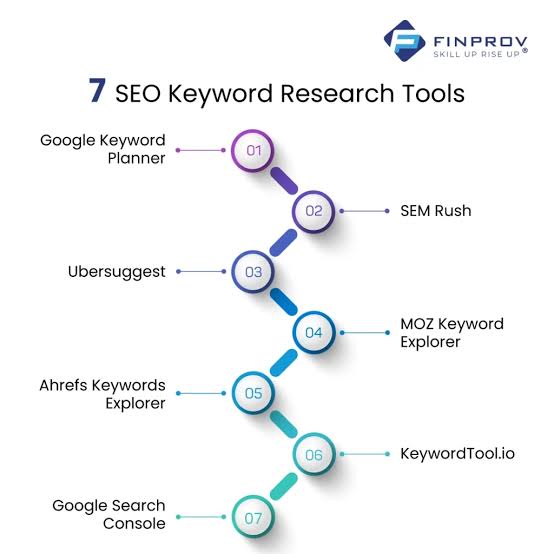
Other SEO tools can provide additional data, including:
- Semrush
- Ahrefs
- Ubersuggest
- Google Trends
- Google Search Console
You can also use AI tools such as ChatGPT or Claude to brainstorm keyword variations, group similar terms, identify possible search intent, and generate content ideas.
However, AI-generated keywords should be treated as ideas to investigate, not as verified search data.
A keyword may sound logical but still have little real-world search demand.
Step 5: Group Similar Keywords
Once you have collected your keyword ideas, organise them into groups.
For example, for a website development company:
General website development
- website development
- website development services
- web development services
Ecommerce
- ecommerce website development
- ecommerce website development company
- online store development
Local
- website development company Pune
- web development company Pune
- website developer Pune
Website redesign
- website redesign services
- website redesign company
- redesign existing website
This process is called keyword clustering or keyword grouping.
It helps prevent a common SEO problem where a business creates multiple pages that are all targeting almost the same search.
Instead, related keywords can often be addressed together on one strong and useful page.
Step 6: Evaluate Search Intent
After collecting and grouping your keywords, ask:
What does someone actually want when they search this?
For example:
“how to create an ecommerce website”
This is primarily informational.
“best ecommerce website platform”
This could be commercial research.
“ecommerce website development company”
This has stronger service-related intent.
“hire ecommerce website developer”
This can indicate an even stronger intention to take action.
The page you create should match that intent.
If someone is looking for information, giving them a sales-heavy service page may not be the best experience.
If someone is looking for a company to hire, sending them to a generic educational article may also be ineffective.
Good keyword research connects the search query, search intent, and the right page.
Step 7: Prioritise the Keywords
At this point, you may have a large list of keywords.
You do not need to target all of them.
Prioritise keywords based on factors such as:
- Relevance
- Search intent
- Search demand
- Competition
- Business value
- Location
- Customer journey
- Existing website authority
- Ability to create useful content
The final keyword list should not simply be the biggest list possible.
It should be a list of keywords that make sense for the business and can contribute to a clear SEO strategy.
That is the difference between collecting keywords and actually doing keyword research.
How to Do Keyword Research for Google Ads
Keyword research for Google Ads follows a similar starting point to SEO, but the decision-making process is different.
With SEO, you are deciding which searches are worth building organic visibility around.
With Google Ads, you are deciding which searches are worth spending money on.
Every click can have a cost. So the objective is not simply to find keywords with high search volume. You need to find searches that are relevant to the business and have the potential to generate a valuable action.
That action could be a purchase, enquiry, phone call, form submission, booking, or another conversion.
Step 1: Start With the Product or Service
Begin with the product or service you want to advertise.
For example, suppose a business provides website development services.
You could start with:
- website development
- website development company
- web development services
- website developer
- ecommerce website development
- custom website development
These are your initial keyword ideas.
At this stage, it is useful to think like a potential customer rather than like the business owner.
Ask yourself:
“If I needed this service today, what would I type into Google?”
Step 2: Search Google Manually
Before relying entirely on a tool, search for the product or service yourself.
For example, search:
website development company
Look at the results and the types of businesses appearing for that search.
You can also examine Google’s autocomplete suggestions, People Also Ask, and Related Searches.
For a sports shoe business, searching for “sports shoes” might reveal searches related to:
- sports shoes for men
- sports shoes for women
- running shoes
- sports shoes under ₹2,000
- sports shoes under ₹5,000
- branded sports shoes
- sports shoes online
These searches can help you understand how customers refine their requirements.
However, there is an important difference when doing this for PPC.
You should ask whether you would actually be comfortable paying for a click from each type of search.
Step 3: Use Google Keyword Planner
Google Keyword Planner is one of the key tools available for researching keywords for Google Ads.
It can help advertisers discover keyword ideas and evaluate information such as estimated search volume, competition, and advertising cost estimates.
You can start with a product, service, website, or keyword idea and use the tool to discover related searches.
For example, a website development company could enter:
website development
The tool may provide additional keyword ideas that can then be reviewed based on relevance and commercial potential.
Keyword Planner is useful because PPC research needs more than ideas. You also need information that can help you understand the potential advertising environment around those searches.
Step 4: Separate High-Intent and Low-Intent Searches
Not every relevant keyword is equally valuable for an advertising campaign.
Consider these searches:
“What is website development?”
This is primarily informational.
“How much does website development cost?”
This could indicate someone researching their options and budget.
“Website development company”
This has stronger commercial intent.
“Hire website developer”
This suggests a person may be closer to taking action.
The exact value of each keyword will depend on the business, campaign, landing page, location, and conversion data.
But thinking about intent helps prevent a campaign from spending money on searches that are unlikely to produce useful results.
Step 5: Consider the Economics
PPC keyword research has something SEO keyword research does not have to deal with in exactly the same way.
You are paying for the traffic.
This means the potential value of a click matters.
Suppose one keyword costs ₹20 per click and another costs ₹100 per click.
It would be easy to assume that the ₹20 keyword is better.
But that is not necessarily true.
If the ₹20 keyword produces visitors who rarely enquire or purchase, while the ₹100 keyword consistently produces qualified leads, the more expensive keyword could generate better business results.
This is why CPC should not be evaluated in isolation.
A better question is:
“What is this click worth to the business?”
The answer depends on factors such as conversion rate, average order value, customer lifetime value, profit margin, and the quality of the leads generated.
Step 6: Match the Keyword With the Landing Page
The keyword, advertisement, and landing page should make sense together.
Suppose someone searches for:
ecommerce website development company
If your advertisement takes them to a generic homepage with no clear information about ecommerce development, the experience may not be ideal.
A dedicated landing page explaining the ecommerce service could be much more relevant.
This creates a simple relationship:
Search → Keyword → Ad → Landing Page → Conversion
If these elements do not match, you may end up paying for traffic without getting the results you want.
Step 7: Review the Search Terms
Keyword research does not end when a campaign is launched.
Once ads start running, the actual searches that triggered your ads can provide valuable information.
The Search Terms data can show what people actually searched before clicking on your advertisement.
This can reveal:
- New relevant keyword opportunities
- Irrelevant searches
- Unexpected customer language
- Searches that generate conversions
- Searches that spend money without producing useful results
This information can then be used to improve the campaign.
Relevant searches can become new keyword opportunities, while irrelevant searches can potentially be excluded using negative keywords.
This makes PPC keyword research an ongoing process rather than a one-time task.
SEO and PPC Start With Keywords, But They Do Not End There
The biggest mistake is to think that keyword research means creating a list and adding those words to a campaign or website.
The real process is much more strategic.
For SEO, you are asking:
“Which searches should our website be visible for organically?”
For PPC, you are asking:
“Which searches are relevant enough that we are willing to pay for the opportunity to reach those people?”
Once that distinction is clear, it becomes much easier to understand why Google Ads has different keyword match types and how they affect the reach and control of a campaign.Google Ads Keyword Match Types: Broad, Phrase and Exact
Finding the right keywords is only one part of Google Ads keyword research.
You also need to decide how closely a person’s search should need to match your keyword before your advertisement can appear.
This is where Google Ads keyword match types come in.
The three main match types are:
- Broad match
- Phrase match
- Exact match
There is also another important part of keyword management called negative keywords, which can help prevent ads from appearing for irrelevant searches.
Understanding these options is important because they affect how much reach and control your campaign has.
1. Broad Match
Broad match is designed to give your ads the widest reach among the three match types.
For example, you might use the keyword:
running shoes
A broad match keyword can allow your advertisement to appear for searches related to the meaning or intent behind that keyword, even when the search does not contain the exact words “running shoes.”
Google can use signals such as the user’s search, the other keywords in the ad group, the landing page, and other relevant information to understand whether a search may be related.
The advantage is reach.
You may discover searches that you would not have thought of while building your original keyword list.
For example, someone searching for:
best shoes for marathon training
could potentially be relevant to a business selling running shoes, even though the search does not exactly match the keyword “running shoes.”
However, wider reach also means you need to monitor the traffic carefully.
If the campaign starts attracting searches that are not relevant to the business, those searches may need to be excluded.
Broad match can be particularly useful when there is enough reliable conversion data and the campaign is using automated bidding strategies that can optimise towards conversions.
2. Phrase Match
Phrase match provides more control than broad match while still allowing your ads to reach a range of relevant searches.
For example:
“running shoes”
The search can contain the meaning of the phrase and may include additional words.
A person might search for:
- best running shoes
- running shoes for beginners
- men’s running shoes
- running shoes under ₹5,000
The exact searches that can match will depend on Google’s understanding of the meaning and intent of the search.
Phrase match can be useful when you want to maintain a stronger connection between the keyword and the searches you are targeting while still allowing some flexibility.
3. Exact Match
Exact match gives advertisers the greatest level of control over the searches that can trigger their ads.
For example:
[running shoes]
However, exact match does not mean that the user must type the keyword character for character.
Google Ads can match exact match keywords to searches that have the same meaning or intent, including certain close variations.
For example, a keyword such as:
[running shoes]
could potentially match a search with the same underlying intent even if the wording is slightly different.
Exact match can be useful when you want tighter control over the types of searches you are targeting.
This can be particularly valuable for highly specific products, services, or keywords where relevance is extremely important.
Which Match Type Should You Use?
There is no single match type that is automatically best for every campaign.
The right choice depends on factors such as:
- Campaign objective
- Budget
- Conversion data
- Audience
- Product or service
- Competition
- Search intent
- Desired level of control
- Bidding strategy
It is also important not to think of match types simply as:
Small budget = exact match
Medium budget = phrase match
Large budget = broad match
The reality is more nuanced.
An advertiser with a limited budget may prefer tighter control over where their money goes, but that does not automatically mean exact match is always the correct choice.
Similarly, broad match can be useful for advertisers looking to discover additional relevant searches, particularly when campaigns have reliable conversion data and appropriate automated bidding.
The goal is to find the balance between reach and relevance.
Don’t Forget Negative Keywords
Match types help determine which searches may trigger your ads.
Negative keywords help determine which searches you do not want your ads to appear for.
Imagine you sell new sports shoes.
You may not want to pay for searches such as:
- shoe repair
- used sports shoes
- free sports shoes
- shoe making course
- how to repair running shoes
These searches may contain words related to your product but do not represent the customer you are trying to reach.
Adding appropriate negative keywords can help reduce irrelevant traffic and protect the advertising budget.
This is one reason PPC keyword research should continue after a campaign goes live.
You can review actual search-term data, identify irrelevant searches, add negative keywords where appropriate, and continue refining the campaign.
The Important Point About Match Types
Match types are not simply technical settings.
They are part of the strategy behind how an advertiser uses their budget.
A campaign focused on a very specific service may need tighter control.
Another campaign may benefit from broader discovery and automated optimisation.
The important thing is to monitor what searches are actually generating clicks and conversions, rather than choosing a match type once and assuming the campaign will remain optimal forever.
Good PPC keyword research is therefore not just about finding keywords.
It is about finding relevant searches, controlling where your budget goes, measuring what happens, and improving the campaign based on actual data.
A Practical Keyword Research Example
Understanding keyword research becomes easier when you see how the process works with an actual business.
Let us take a simple example.
Imagine a business that provides website development services.
The business wants to attract more customers through Google search. It could use both SEO and Google Ads, but the keyword research for each strategy would not necessarily be identical.
Step 1: Start With the Main Service
The first seed keyword could be:
website development
From there, we can think about the different ways a potential customer might search for the same service.
For example:
- website development company
- website development services
- web development company
- website developer
- custom website development
- business website development
- ecommerce website development
- website redesign services
- website development company Pune
At this point, we have ideas, not a final keyword list.
The next step is to understand what each search means.
Step 2: Identify Search Intent
Consider these searches:
“What is website development?”
Someone searching this may simply want to understand the concept.
This could be an opportunity for an educational blog article.
“How much does website development cost?”
This person may be researching their options and trying to understand the investment required.
A detailed guide about website development costs could be useful here.
“Best website development company”
This person may already be comparing providers.
A service page, case study, or comparison-focused page could be more relevant.
“Website development company Pune”
This search has a clear service and location component.
A local service page could potentially target this type of search.
“Hire website developer”
This suggests a stronger possibility that the person is looking to take action.
For PPC, this type of commercial intent may be particularly worth evaluating.
The important point is that these keywords should not all be treated in exactly the same way.
Step 3: Decide How SEO Could Use the Keywords
For SEO, the business could create different types of pages based on the search intent.
For example:
Blog article
Target topic:
“How Much Does Website Development Cost?”
The article could explain the factors that influence website development costs and help potential customers understand what they are paying for.
Service page
Target topic:
“Website Development Services”
This page could explain the company’s development services, process, technology, benefits, and previous work.
Dedicated service page
Target topic:
“Ecommerce Website Development”
This could focus specifically on businesses looking to build an ecommerce website.
Local page
Target topic:
“Website Development Company in Pune”
This page could focus on the company’s services for businesses in the relevant location.
Instead of forcing every keyword onto one page, the keywords are connected to pages that actually satisfy the searcher’s needs.
Step 4: Decide How PPC Could Use the Keywords
The approach changes when we move to Google Ads.
A campaign could focus on keywords with stronger commercial intent, such as:
- website development company
- website development services
- ecommerce website development company
- hire website developer
- website development company Pune
The business could then create relevant ad groups and advertisements around these themes.
The landing page should also match the search.
For example, someone searching for:
ecommerce website development company
should ideally be directed to a page that specifically discusses ecommerce website development rather than being sent to a generic homepage.
The closer the relationship between the search, advertisement, and landing page, the more relevant the overall experience can be.
Step 5: Compare the Potential Value
Now imagine that two keywords are available:
Keyword A: website development
Keyword B: website development company Pune
Keyword A may have a larger audience.
However, Keyword B is more specific.
The second search tells us that the person is looking for a company and has included a location.
That does not automatically make Keyword B better.
The actual value still needs to be evaluated using search demand, competition, conversion data, business priorities, and other relevant information.
But the example demonstrates why specificity and intent can matter more than search volume alone.
The Same Research Can Reveal Content Ideas
Keyword research can also help a business discover questions that potential customers have.
Suppose research reveals searches such as:
- how much does a business website cost
- how long does it take to build a website
- website redesign vs new website
- what should a business website include
- how to choose a website development company
These searches can become useful content topics.
The business is no longer creating blog posts simply because it needs to publish something every week.
Instead, the content is connected to questions and problems that potential customers are already searching for.
From Keywords to a Marketing Strategy
This is where keyword research becomes more valuable than simply creating a spreadsheet.
A single research process can influence:
SEO pages
↓
Blog content
↓
Google Ads campaigns
↓
Landing pages
↓
Ad copy
↓
Conversion optimisation
The keyword is only the starting point.
The real objective is to understand the person behind the search and create the right experience for them.
For a business like WebDreams, this approach can help connect SEO, paid media, website development, content, and conversion-focused landing pages instead of treating each marketing activity as a separate task.Common Keyword Research Mistakes Businesses Should Avoid
Keyword research can look simple from the outside. Find a few keywords, check their search volume, add them to a website or Google Ads campaign, and start generating traffic.
In practice, it is not that straightforward.
A keyword can have thousands of searches and still be almost useless for a particular business. Another keyword can have relatively low search volume but consistently attract people who are ready to enquire or purchase.
Here are some of the most common keyword research mistakes businesses should avoid.
1. Choosing Keywords Only Because They Have High Search Volume
High search volume can look attractive.
If one keyword has 10,000 monthly searches and another has 500, it may seem obvious that the first keyword is better.
But search volume does not tell you whether those people are relevant to your business.
A broad keyword may attract a large audience with very different needs.
A more specific keyword may attract fewer people but have much stronger commercial intent.
The better question is not:
“How many people search for this?”
It is:
“How valuable are the people searching for this to my business?”
2. Ignoring Search Intent
A keyword can be relevant to your industry but still have the wrong intent.
For example, a company offering paid digital marketing services may find:
“what is Google Ads?”
This is related to the service, but the person may simply be learning about Google Ads.
Someone searching for:
“Google Ads agency”
is likely much closer to looking for a service provider.
Both keywords may be useful, but they should not necessarily lead to the same page or be treated in the same way.
3. Targeting Keywords That Are Too Broad
Broad keywords can attract a lot of traffic, but they can also make it difficult to understand what the searcher actually wants.
For example:
“marketing”
is extremely broad.
Compare that with:
“digital marketing agency for small business”
The second search provides much more information about the user’s potential requirement.
Being specific does not mean ignoring broad keywords completely. It means understanding where broad keywords fit into the overall strategy.
4. Using the Same Keyword Strategy for SEO and PPC
SEO and PPC both use keywords, but they have different objectives.
A keyword that is valuable for SEO because it can bring relevant informational traffic may not be worth paying for in Google Ads.
Similarly, a high-converting PPC search may deserve additional attention from an SEO team.
The strategy should therefore consider the purpose of the channel.
5. Ignoring Location
Location can completely change the intent behind a search.
Compare:
website development company
with:
website development company Pune
If a business primarily serves customers in Pune, the second keyword may be particularly relevant.
Location-based searches can be important for businesses such as agencies, restaurants, clinics, consultants, service providers, and other local businesses.
6. Ignoring Negative Keywords in PPC
PPC campaigns can sometimes receive clicks from searches that are related to the keyword but irrelevant to the business.
For example, a company selling premium website development services may not want traffic from searches related to:
- free website builders
- website development courses
- website development tutorials
- website templates
Reviewing actual search terms and adding appropriate negative keywords can help reduce irrelevant traffic.
7. Creating a Separate Page for Every Keyword
Another common SEO mistake is assuming that every keyword requires its own page.
Consider:
- website development company
- web development company
- website development services
- web development services
These searches are closely related.
Creating four pages with almost identical content simply to target each phrase separately may not create a better website.
Instead, related keywords can often be grouped around one comprehensive and useful page.
The focus should be on satisfying the searcher’s need, not producing as many keyword-targeted pages as possible.
8. Relying Entirely on AI-Generated Keywords
AI tools can be useful for brainstorming.
You can ask an AI tool to generate keyword variations, group keywords by intent, or suggest questions customers may ask.
But a generated keyword is not automatically a real opportunity.
AI does not replace actual search data, business knowledge, customer research, or campaign performance data.
Use AI to expand your thinking, then validate important keywords using appropriate tools and real search behaviour.
9. Never Updating Keyword Research
Keyword research should not always be a one-time activity.
Customer behaviour changes.
New products appear.
Competitors enter the market.
Search trends change.
Google Ads campaigns generate new search-term data.
A keyword that was valuable six months ago may perform differently today.
Regularly reviewing keyword performance can help businesses discover new opportunities and remove or reduce focus on keywords that are no longer useful.
The Bigger Mistake: Looking at Keywords in Isolation
The biggest mistake is treating keyword research as a spreadsheet exercise.
A keyword does not exist independently of the business.
Its value depends on:
Who is searching → What they want → Why they are searching → What the business offers → What action they could take
When those elements align, keyword research becomes much more than finding popular search terms.
It becomes a way to understand customer demand and build a marketing strategy around it.
Can AI Tools Do Keyword Research?
AI has changed the way marketers approach keyword research.
Tools such as ChatGPT and Claude can generate keyword ideas within seconds. They can also help organise large lists of keywords, identify possible search intent, group similar terms, and suggest questions that potential customers might ask.
For example, if you are researching keywords for an ecommerce business selling sports shoes, you could ask an AI tool to generate keyword variations around:
sports shoes
It could suggest ideas related to:
- running
- walking
- gym
- price
- brands
- gender
- age
- sports
- product features
- buying intent
This can be useful during the brainstorming stage.
However, there is an important limitation.
AI-generated keywords are ideas, not verified search data.
An AI tool may suggest a phrase because it sounds natural or relevant, but that does not necessarily mean that thousands of people are searching for it.
This is why AI should support keyword research rather than completely replace traditional research methods.
What Can AI Help With?
AI can be useful for:
- Generating seed keyword ideas
- Expanding keyword variations
- Grouping similar keywords
- Identifying possible search intent
- Finding questions related to a topic
- Creating content ideas
- Building initial keyword clusters
- Analysing large keyword lists
- Creating content briefs
For example, after collecting hundreds of keywords, AI can help organise them into categories such as informational, commercial, transactional, and navigational intent.
This can save time during the organisation and planning stage.
What Should Still Be Verified?
Important keyword information should be checked using actual data and appropriate research tools.
This includes:
- Search volume
- Cost per click
- Competition
- Search trends
- Actual search terms
- Conversion performance
- Business relevance
For Google Ads, tools such as Google Keyword Planner can provide useful estimates and keyword information.
For SEO, tools such as Google Search Console can provide information about the searches through which a website is already receiving impressions and clicks.
This creates a useful combination:
AI helps generate and organise ideas.
Keyword research tools help validate demand.
Business and customer knowledge helps determine relevance.
Performance data helps determine what actually works.
No single tool can replace all four.
From Keyword Research to a Complete Marketing Strategy
The real value of keyword research appears when the findings are used across different parts of marketing.
Imagine that research shows potential customers are repeatedly searching for:
ecommerce website development
That keyword should not simply be added to a spreadsheet and forgotten.
It could influence several marketing activities.
Website
The business could create or improve an ecommerce website development service page.
SEO
The page could be optimised around relevant ecommerce development searches and supported by useful content.
Content
The business could create articles answering questions such as:
- How much does an ecommerce website cost?
- What should an ecommerce website include?
- How long does ecommerce website development take?
- How to choose an ecommerce website development company?
Google Ads
Relevant commercial searches could be considered for a paid search campaign.
Landing Page
A dedicated landing page could be created for people arriving through a specific advertising campaign.
Conversion Optimisation
The page could then be improved based on user behaviour and conversion data.
This is where keyword research moves beyond SEO.
It becomes a source of information about customer demand.
Keywords Can Tell You What Customers Care About
Searches can reveal more than just what people want to find.
They can reveal what people care about.
For example, if customers frequently search:
website development cost
price may be an important concern.
If they search:
website development company near me
location may matter.
If they search:
best ecommerce website development company
they may be comparing providers.
If they search:
website development company with maintenance
ongoing support may be an important consideration.
These insights can influence not only keywords, but also website messaging, advertisements, service packages, content, and sales conversations.
That is why good keyword research should always connect back to the customer.
The goal is not to collect hundreds of keywords.
The goal is to understand what potential customers are looking for and how your business can meet that demand.
Keyword Research Checklist
Whether you are researching keywords for SEO, Google Ads, or both, having a simple framework can help you avoid making decisions based only on search volume.
Before adding a keyword to your strategy, ask the following questions.
Keyword Relevance
Is this keyword actually relevant to the business?
A keyword can have high search volume and still be unrelated to what you sell.
Start with the business, its products, services, customers, and goals.
Search Intent
What does the person searching this keyword actually want?
Is the person:
- Looking for information?
- Comparing options?
- Looking for a specific company or product?
- Ready to make a purchase?
- Looking for a local service?
The answer can determine whether the keyword should be used for a blog article, service page, landing page, or advertising campaign.
Search Demand
Are people actually searching for this?
Use appropriate keyword research tools to understand search demand rather than relying only on assumptions or AI-generated suggestions.
Competition
How difficult will it be to compete for this keyword?
For SEO, consider the strength and relevance of the pages already ranking.
For PPC, consider the competitive advertising environment and potential cost.
Business Value
Can this keyword contribute to a meaningful business outcome?
Think beyond traffic.
Depending on the business, that outcome could be:
- A sale
- A qualified lead
- A phone call
- A booking
- A consultation
- A registration
- An enquiry
Location
Does location matter for this search?
A local business may need to consider location-specific searches such as:
“digital marketing agency Pune”
rather than focusing only on:
“digital marketing agency”
Landing Page Relevance
Does the website have a page that actually satisfies the search?
A keyword should not be selected simply because it sounds attractive.
There should be a relevant destination for the person who clicks or visits.
PPC Budget
If the keyword is being considered for Google Ads, ask:
Is this search worth paying for?
Look at the potential cost, expected conversion value, and the economics of the campaign.
Negative Keywords
For PPC campaigns, ask:
Are there searches that look relevant but are actually unwanted?
These can potentially be added as negative keywords after reviewing search-term data.
Measurement
Finally:
How will we know whether the keyword is working?
For SEO, this could include:
- Impressions
- Rankings
- Organic clicks
- Organic traffic
- Engagement
- Leads
- Conversions
For PPC, it could include:
- Impressions
- Clicks
- Click-through rate
- Cost per click
- Conversions
- Cost per conversion
- Conversion value
- Return on ad spend
The exact metrics depend on the campaign and business objective.
Keyword Research Should Lead to Action
The purpose of keyword research is not to create a spreadsheet containing hundreds or thousands of search terms.
The purpose is to make better marketing decisions.
A useful keyword should tell you something about the customer, their intent, or an opportunity for the business.
It can help answer questions such as:
What should we create?
Which services should we promote?
Which searches should we target organically?
Which searches are worth paying for?
What should our landing page say?
What questions do our customers have?
Where are we currently missing opportunities?
This is why keyword research can become the foundation for a much larger digital marketing strategy.
How WebDreams Can Help
Keyword research is only the first step.
The real value comes from knowing what to do with the information.
At WebDreams, keyword research can be connected with SEO, paid media, website development, landing pages, content, and digital marketing campaigns.
For SEO, the focus can be on identifying relevant search opportunities and building pages and content that match customer intent.
For paid media, the focus can be on finding relevant searches, structuring campaigns, controlling irrelevant traffic, and continuously improving performance based on campaign data.
The objective is not to chase keywords simply because they have high search volume.
It is to identify the searches that make sense for the business and connect them to the right marketing action.
Your customers are already searching for products, services, answers, and solutions. The question is whether your business is visible when they search.
If you want to understand which keywords could create opportunities for your business, WebDreams can help you build a keyword strategy based on your audience, services, competition, and marketing goals.
Talk to WebDreams about building a keyword strategy that goes beyond rankings and focuses on business results.