

Search is changing.

For years, the basic SEO model was straightforward:
Search Google → See the results → Click a website → Read the information → Take action
That model is no longer the only way people find information.
Today, someone might search on Google, ask ChatGPT for recommendations, use Claude to research a topic, ask Gemini a question, or use Perplexity to find sources.
This creates a bigger question for businesses:
If customers are using search engines and AI assistants to discover information, where does your website fit into that journey?
The answer is not to abandon SEO.
It is to understand that SEO is expanding beyond traditional Google rankings.
Your business now needs to build a digital presence that search engines and AI systems can understand, trust, and potentially reference.
SEO Is No Longer Just About Ranking on Google
Traditional SEO has largely focused on getting a page into Google’s search results.
The objective was:
Keyword → Ranking → Click → Website Visit → Lead/Sale
That still matters.
Google remains one of the most important discovery channels for businesses.
But the search journey is becoming more fragmented.
A potential customer could now:
- Search Google for a product
- Ask ChatGPT which companies provide it
- Use Claude to compare different options
- Ask Gemini for additional information
- Use Perplexity to find sources and research a topic
- Visit a company’s website directly after discovering the brand elsewhere
The result is a much larger search ecosystem.
Instead of thinking only about Google rankings, businesses should start thinking about overall search visibility.
What Is AI Search?
AI search uses artificial intelligence to understand a user’s question and provide a synthesized response rather than simply returning a list of links.
Instead of searching:
“best web design company in Hubli”
and manually opening ten websites, someone might ask an AI assistant:
“Which web design companies in Hubli would you recommend for a small business?”
The user may receive a summarized answer, comparisons, recommendations, or sources to explore.
This changes the customer’s journey.
Traditional search:
Query → Search results → Website → Decision
AI-assisted search:
Question → AI answer → Sources/recommendations → Brand consideration → Website/decision
That difference is important for marketers.
Google, ChatGPT, Claude and Others Are Now Part of the Search Ecosystem
It’s tempting to think of AI search as simply “Google with AI.”
It isn’t that simple.
Different platforms have different systems, data sources, retrieval methods, models, and ways of presenting information.
For businesses, the important point isn’t that they all work identically.
It’s that customers can discover your business through multiple information systems.
Google continues to be critical for traditional organic search, local search, shopping, and increasingly AI-assisted search experiences.
ChatGPT
People increasingly use ChatGPT for research, comparisons, recommendations, explanations, and decision-making.
For a business, this makes having clear and authoritative information across the web increasingly important.
Claude
Claude is another AI assistant people can use for research, analysis, writing, comparisons, and information discovery.
Again, there isn’t a simple “rank #1 on Claude” SEO formula.
Gemini
Gemini is part of Google’s broader AI ecosystem and connects AI-assisted experiences with information users are already accustomed to finding through Google.
Perplexity
Perplexity has emphasized an answer-and-sources approach, making source visibility particularly relevant to businesses producing authoritative content.
And these aren’t necessarily the last platforms we’ll see.
The broader trend is what matters:
People are changing how they ask for information.
Does SEO Still Matter in the Age of AI?

Absolutely.
In fact, good SEO fundamentals may become even more important.
Think about what an AI system needs in order to understand a business.
It needs information.
That information may come from:
- Your website
- Product pages
- Service pages
- Articles
- Reviews
- Business listings
- Industry publications
- News coverage
- Third-party websites
- Expert content
- Other publicly available sources
If your business has very little useful information online, there is less for search engines and AI systems to understand.
If your business has a strong, consistent and authoritative digital presence, there is more context available.
This doesn’t guarantee that an AI assistant will mention your business.
But it gives your business a much stronger digital foundation.
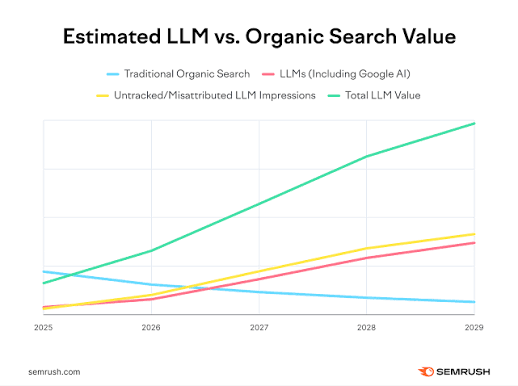
Organic Traffic Could Change — Not Disappear
One of the biggest concerns marketers have is:
“Will AI search destroy organic traffic?”
The answer is more nuanced.
Some searches may produce answers directly on the search platform.
For example, a user asking:
“What is a meta description?”
may not need to visit a website if the answer is already available in the search experience.
This can reduce clicks for certain informational queries.
But other searches still require deeper research.
Consider:
“Best CRM for a 20-person sales team”
or:
“Compare dedicated hosting providers for an e-commerce website”
or:
“Best digital marketing agency for a manufacturing company in Karnataka”
These decisions often require more than a short answer.
Users may still visit:
- Company websites
- Reviews
- Case studies
- Product pages
- Pricing pages
- Comparison articles
- Independent publications
So the future isn’t necessarily:
AI replaces websites.
It may be:
AI changes which websites people choose to visit and when they visit them.
The New SEO Funnel
The traditional SEO funnel looked something like:
Impression
↓
Click
↓
Website visit
↓
Lead
↓
Customer
AI search introduces another potential layer:
Question
↓
AI-generated answer
↓
Sources / recommendations / brands
↓
Brand awareness
↓
Website visit
↓
Lead
↓
Customer
This means visibility can happen before the click.
A customer may encounter your brand in an answer, remember it, search for it later, and eventually become a customer.
That makes brand visibility increasingly important.
Ranking Isn’t the Only Metric You Should Watch
For years, marketers have focused heavily on:
- Keyword rankings
- Impressions
- Click-through rate
- Organic sessions
These metrics remain important.
But businesses should increasingly consider additional indicators.
Brand Searches
Are more people searching for your company by name?
Direct Traffic
Are users returning directly to your website?
Referral Traffic
Are external websites sending qualified visitors?
Mentions
Is your company being discussed across relevant websites?
Backlinks
Are authoritative websites referencing your content?
Leads and Sales
Is organic visibility actually generating business?
The ultimate goal isn’t:
“Get more traffic.”
It’s:
“Get discovered by the right people and turn that visibility into business.”
Content Strategy Needs to Change
AI makes it easier than ever to produce generic content.
That creates a problem.
If everyone can publish:
“10 Benefits of Digital Marketing”
why would your article deserve attention?
The answer is originality and usefulness.
Businesses should invest more heavily in content that contains:
- Original research
- Real examples
- First-hand experience
- Case studies
- Expert opinions
- Unique data
- Detailed comparisons
- Practical frameworks
- Industry-specific insights
- Clear answers to customer questions
Instead of creating content simply because a keyword has search volume, ask:
“Does this page provide information that a customer genuinely needs?”
That is a much stronger content strategy.
Topical Authority Becomes More Important
Imagine you’re a web development company.
You publish one article about web design.
That’s useful.
But what if your website has an entire collection covering:
- Website design
- Website development
- E-commerce development
- Website maintenance
- Web hosting
- SEO
- Website security
- UX
- Website performance
- Conversion optimization
Now your website demonstrates broader knowledge around the subject.
This is what marketers often describe as topical authority.
You aren’t just publishing isolated articles.
You’re building a connected knowledge base.
Internal Linking Still Matters
One mistake businesses may make is assuming AI search makes traditional SEO irrelevant.
It doesn’t.
Your website still needs a logical structure.
Internal links help users and search engines discover related content.
For example:
SEO Guide
→ On-Page SEO
→ Off-Page SEO
→ Keyword Research
→ Technical SEO
→ Link Building
This creates relationships between pages.
For businesses publishing lots of content, a strong internal linking structure can make the website easier to navigate and understand.
For example, WebDreams has already published a practical guide explaining on-page SEO and website optimization.
That article can naturally support related content about off-page SEO, keyword research, technical SEO, and AI search.
Off-Page SEO Becomes More Than “Building Backlinks”
This is where the future of SEO gets particularly interesting.
Traditional link building often focuses on:
How many backlinks can we build?
A stronger question is:
Where is my business being discussed and referenced online?
Think about your business appearing across:
- Industry publications
- Business websites
- Relevant directories
- News websites
- Expert articles
- Partner websites
- Reviews
- Interviews
- Case studies
- Social platforms
- Professional communities
This creates a broader digital footprint.
Backlinks are still important.
But the bigger objective is building online authority and brand recognition.
Your Business Needs a Consistent Digital Identity
Imagine that your website says:
WebDreams is a web development company.
But one directory describes you as a digital marketing company.
Another says you’re a software company.
Another lists a completely different business description.
Your information becomes fragmented.
Businesses should therefore maintain consistent information across important online properties.
That includes:
- Business name
- Services
- Locations
- Contact information
- About information
- Industry
- Expertise
- Products
The clearer your digital identity, the easier it is for people—and information systems—to understand what your business actually does.
Reviews Matter More Than Just Star Ratings
Reviews aren’t only about getting five stars.
They can also communicate what your business actually does.
Compare:
“Great company. Good service.”
with:
“They redesigned our e-commerce website and improved the checkout experience.”
The second review contains much more contextual information.
It tells potential customers—and potentially systems processing public information—something about:
- The company
- The service
- The customer’s experience
- The type of project
Businesses should therefore encourage genuine, detailed customer feedback, rather than focusing only on the number of reviews.
AI Doesn’t Mean You Should Stuff Your Website With Keywords
Another misconception is:
“If AI systems need information, I should put every possible keyword on my website.”
No.
Keyword stuffing wasn’t a good SEO strategy before AI, and it isn’t a good strategy now.
Instead, create pages that clearly explain:
- What you offer
- Who you serve
- How your service works
- What problems you solve
- What makes your approach different
- What results customers can expect
- Why customers should trust you
Write for the customer first.
Optimize for search second.
Structured, Clear Content Has an Advantage
AI systems and search engines need to understand content.
That makes clear content structure valuable.
Use:
- Descriptive headings
- Short paragraphs
- Clear definitions
- Lists
- Tables where appropriate
- FAQs
- Specific examples
- Logical page structure
For example, don’t hide your service information behind vague marketing language.
Instead of:
“We deliver innovative digital transformation solutions.”
say:
“We design and develop websites for small and medium-sized businesses.”
The second statement is much clearer.
What Businesses Should Do Now
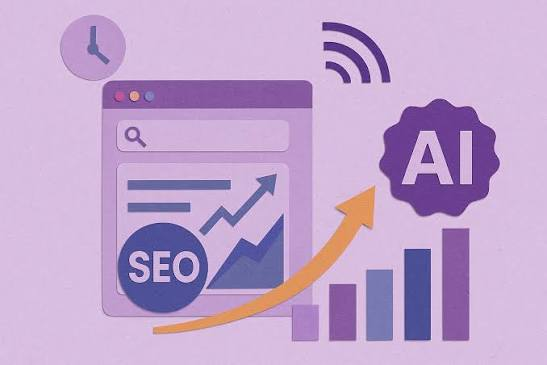
You don’t need to completely rebuild your SEO strategy because AI exists.
Instead, strengthen the fundamentals.
1. Improve Your Website
Make sure your important pages clearly explain your products and services.
2. Build Useful Content
Create content that answers real customer questions.
3. Develop Topic Clusters
Build multiple useful resources around your most important areas of expertise.
4. Strengthen Your Internal Linking
Connect related articles, services, products, and resources.
5. Build Relevant External Authority
Earn quality backlinks, mentions, citations, and industry references.
6. Strengthen Your Brand
Make your company recognizable beyond your website.
7. Publish Original Information
Case studies, data, research, expert insights, and real experience can make content more useful.
8. Improve Your Business Profiles
Keep important business information accurate and consistent.
9. Track Business Outcomes
Don’t measure SEO only by rankings.
Track:
Traffic → Leads → Sales → Revenue
Should You Optimize Specifically for ChatGPT and Claude?
This is where businesses need to be careful.
There is no universal checklist that guarantees:
“Do these 10 things and ChatGPT will recommend your business.”
The same applies to Claude, Gemini, Perplexity, and other AI systems.
Their systems can change, and they don’t necessarily evaluate websites using identical processes.
Instead of trying to “hack” individual AI platforms, build an online presence that is:
Clear
Relevant
Useful
Authoritative
Consistent
Well-referenced
That approach is much more sustainable.
The Future of SEO Is Search Visibility
The biggest shift may be in how we define SEO.
Previously:
SEO = Ranking on Google
Today:
SEO = Search visibility across the digital ecosystem
Tomorrow, businesses may need to think about visibility across:
- Search engines
- AI assistants
- Social platforms
- Marketplaces
- Communities
- Review platforms
- Industry publications
Your website remains the foundation.
But it shouldn’t be the only place where your business exists online.
A Practical AI-Era SEO Strategy
For a business, the strategy can look like this:
Step 1 — Build a Strong Website
Create clear service, product, location, and company pages.
↓
Step 2 — Create Helpful Content
Answer the questions your customers actually ask.
↓
Step 3 — Build Topical Authority
Cover important subjects comprehensively.
↓
Step 4 — Strengthen Internal Links
Connect your content logically.
↓
Step 5 — Build External Authority
Earn relevant backlinks, mentions, citations, and coverage.
↓
Step 6 — Build Your Brand
Become recognizable within your industry.
↓
Step 7 — Measure Visibility
Track rankings, traffic, mentions, brand searches, leads, and conversions.
This isn’t about choosing between Google SEO and AI SEO.
It’s about building an SEO foundation that supports visibility wherever your potential customers are searching for answers.
Is Your Business Ready for AI Search?
AI is changing how people discover businesses.
But you don’t need to chase every new platform with a completely different SEO strategy.
You need a strong foundation.
WebDreams helps businesses build that foundation through SEO, content, on-page optimization, off-page SEO, website optimization, and digital marketing.
Want Your Business to Be Easier to Find On Search and Beyond?
Build an SEO strategy designed for the changing search landscape.
→ Talk to WebDreams About Your SEO Strategy
Don’t optimize only for today’s Google ranking.
Build a digital presence that can continue working as search evolves.
Final Thoughts
AI isn’t necessarily killing SEO.
It’s changing what SEO is trying to achieve.
The old objective was:
Get a ranking.
The new objective is broader:
Become a trusted source that people—and the systems helping them find information—can discover, understand, and evaluate.
Google still matters.
But Google isn’t the entire search ecosystem anymore.
ChatGPT, Claude, Gemini, Perplexity, and other AI experiences are changing how people research, compare, and make decisions.
That means businesses should stop thinking only about:
“How do I rank for this keyword?”
and start asking:
“How do I become visible and credible wherever my customers are looking for answers?”
That’s the direction SEO is heading.
