


Introduction
In today’s digital world, having a website is essential for businesses that want to build credibility, reach new customers and grow online. However, creating a professional website is only the beginning. To ensure that your website remains fast, secure, accessible and reliable, you need the right web hosting solution.
Web hosting is where your website’s files, databases, images, applications and other resources are stored. When customers visit your domain, the hosting server delivers your website to their browsers. This means that your choice of hosting provider can directly affect your website’s speed, uptime, security, user experience and overall performance.
With so many hosting options available, choosing the right one can be confusing, especially for small businesses and beginners. The cheapest plan may not always be the best choice, while an expensive solution may provide resources you don’t currently need.
In this guide, we’ll explain the important factors to consider when choosing the right web hosting for your business.
What is Web Hosting?

Web hosting is a service that provides the server space and infrastructure required to make a website available on the internet. Website hosting is a service that stores your website files on a physical or virtual server, making your site visible to people on the internet.
A hosting server stores important website components such as:
- HTML, CSS and JavaScript files
- Images and videos
- Databases
- Applications
- Website backups
- Business email data
When a visitor enters your domain name, the hosting server delivers the required website files to their browser.
1. Understand Your Website Requirements
Before purchasing a hosting plan, understand what your website actually needs.

Consider factors such as:
- Type of website
- Expected number of visitors
- Storage requirements
- Applications and software
- Database requirements
- Security requirements
- Future business growth
For example, a small business website may not require the same resources as a large e-commerce website receiving thousands of visitors every day.
Understanding your requirements helps you avoid both underpowered and unnecessarily expensive hosting plans.
2. Choose the Right Type of Hosting
There are several types of web hosting available and each is designed for different requirements.
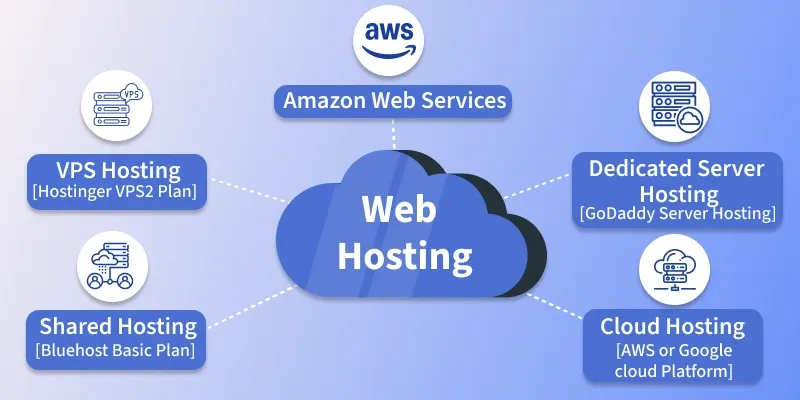
Shared Hosting
Shared Hosting allows multiple websites to use resources on the same physical server.
It is suitable for:
- Small business websites
- Personal websites
- Blogs
- Beginners
It is generally affordable and easy to manage.
VPS Hosting
Virtual Private Server (VPS) Hosting provides dedicated virtual resources within a physical server.
It offers:
- Better performance
- Greater control
- Improved scalability
- More resources
VPS is suitable for growing businesses and websites that have outgrown Shared Hosting.
Cloud Hosting
Cloud Hosting distributes resources across interconnected servers.
It provides:
- High availability
- Scalability
- Flexible resources
- Reliable performance
Cloud Hosting can be useful for businesses expecting fluctuating or rapidly increasing traffic.
Dedicated Hosting
Dedicated Hosting provides an entire physical server to a single customer.
It offers maximum control and resources and is suitable for large websites, applications and businesses with demanding hosting requirements.
3. Prioritize Website Speed
Website speed is an important part of the user experience. Visitors expect websites to load quickly and slow pages can cause users to leave before interacting with your content.

When choosing a hosting provider, look for:
- SSD or NVM storage
- High-performance servers
- Reliable network infrastructure
- Efficient server resources
- Caching support
A faster website can improve user satisfaction and support your overall SEO strategy.
4. Check the Uptime Guarantee
Uptime refers to the amount of time your website remains available to visitors.

Frequent downtime can result in:
- Lost customers
- Missed enquiries
- Reduced revenue
- Poor user experience
- Damage to brand reputation
A reliable hosting provider should offer a strong uptime guarantee and dependable server infrastructure.
For businesses that depend heavily on their website, uptime should be one of the most important factors when comparing hosting providers.
5. Consider Website Security
Cybersecurity should never be overlooked when choosing web hosting.

A quality hosting provider should offer security features such as:
- SSL certificates
- Firewall protection
- Malware scanning
- DDoS protection
- Security monitoring
- Regular updates
- Secure server infrastructure
Strong hosting security provides an additional layer of protection for your website and customer information.
6. Look for Automatic Backups
Even with strong security, unexpected problems can occur. Server failures, accidental deletion, software problems or cyber attacks can result in data loss.

Automatic backups allow you to restore your website when something goes wrong.
Before purchasing hosting, check:
- How frequently backups are performed
- How long backups are retained
- Whether restoration is easy
- Whether backups are stored separately
Regular backups can save your business significant time and money.
7. Choose a Scalable Hosting Solution
Your hosting requirements may change as your business grows.

A website that works perfectly today may require additional CPU, RAM, storage or bandwidth in the future.
Choose a hosting provider that allows you to easily upgrade from:
Shared Hosting → VPS Hosting → Cloud or Dedicated Hosting
Scalability ensures that your website can continue handling increased traffic and business activity without requiring a complete migration.
8. Evaluate Technical Support
Technical problems can occur at any time. Having access to reliable technical support can make resolving these issues much easier.

Look for providers offering:
- 24/7 support
- Live chat
- Email support
- Ticket-based support
- Knowledge resources
Good technical support can reduce downtime and help businesses resolve hosting-related problems quickly.
9. Consider Business Email Hosting
For businesses, professional communication is important.

Instead of using a generic email address, domain-based email allows you to create addresses such as:
Professional email hosting strengthens your brand identity and creates greater confidence among customers.
10. Compare Pricing and Features
Price is an important consideration, but it should not be the only deciding factor.
When comparing hosting plans, look at:
- Storage
- Bandwidth
- Performance
- Security
- Backups
- Email accounts
- Technical support
- Scalability
- Renewal pricing
A slightly more expensive plan may provide significantly better value if it offers stronger performance, security and support.
Common Web Hosting Mistakes to Avoid
Businesses often make hosting decisions based only on price. Some common mistakes include:
- Choosing the cheapest provider without checking reliability.
- Buying more resources than necessary.
- Ignoring security features.
- Not checking backup policies.
- Overlooking technical support.
- Choosing a hosting plan with limited scalability.
- Ignoring renewal costs.
- Not considering website traffic requirements.
Careful research before purchasing can prevent many problems later.
How the Right Hosting Can Help Your Business
Choosing the right hosting solution can provide several benefits:
- Faster website performance
- Better website availability
- Improved security
- Better user experience
- Easier website management
- Greater scalability
- Stronger business credibility
- Better support for SEO
- Reduced technical problems
Your hosting provider is essentially the foundation on which your website operates, so choosing carefully can make a significant difference.
Conclusion
Choosing the right web hosting is an important investment for any business. The ideal hosting solution depends on your website’s size, traffic, technical requirements, security needs, budget and future growth plans.
Small websites may start with Shared Hosting, while growing businesses can benefit from VPS Hosting or Cloud Hosting. Larger websites with demanding applications may require Dedicated Hosting.
Instead of choosing a hosting plan simply because it is cheap, evaluate its performance, uptime, security, backups, scalability, technical support and overall value. The right hosting solution will provide a reliable foundation for your website and help your business deliver a better online experience to customers.
At WebDreams India, businesses can explore solutions including web hosting, VPS hosting, cloud hosting, dedicated servers, domain registration, website development, SEO and digital marketing. Choosing the right combination of these services can help create a secure, reliable and scalable online presence for long-term business growth.

